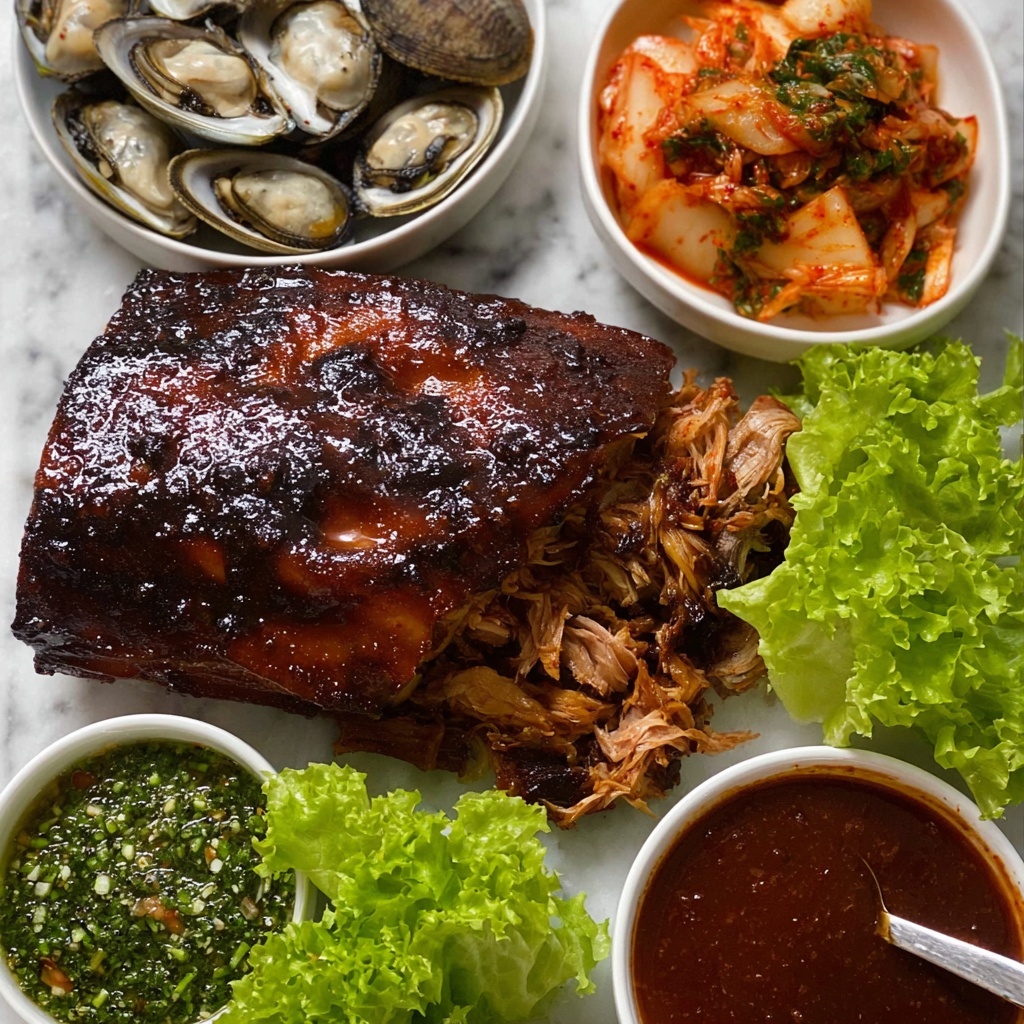
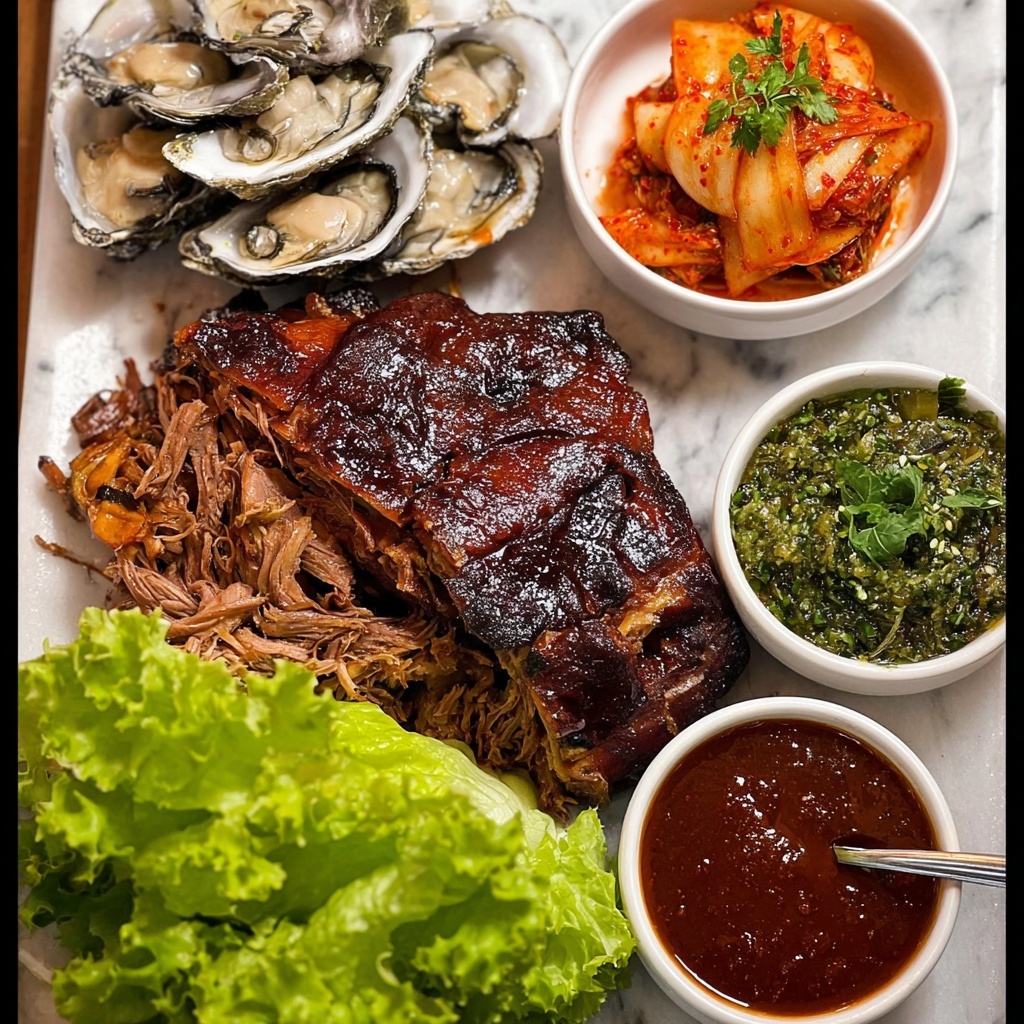
If you’ve never experienced the magic of tender, juicy pork shoulder slowly simmered to perfection, then the Momofuku Bossam (Korean Slow Cooked Pork Shoulder Roast) Recipe is about to become your new obsession. This dish is a celebration of Korean flavors and textures, blending sweet, salty, and savory notes with melt-in-your-mouth pork that practically falls apart at the touch of a fork. Whether you’re serving it for a cozy family dinner or an impressive feast with friends, this recipe delivers comfort and excitement on every plate.
Ingredients You’ll Need
The beauty of making Momofuku Bossam lies in its deceptively simple ingredients, each chosen to boost flavor and create that quintessential Korean slow-cooked pork experience. From the perfect balance of salt and sugar to fresh scallions and aromatic ginger, every component plays a crucial role in building layers of taste.
- 3.5-4 kg/7-8 lb pork butt/shoulder, bone in & skinless: The star of the show, this cut is ideal for slow cooking due to its fat marbling and tenderness.
- 1/2 cup white sugar: Adds subtle sweetness that caramelizes during cooking.
- 1/2 cup kosher or cooking salt: Essential for seasoning the pork deeply, ensuring a perfectly balanced flavor (avoid table salt for the best texture).
- 1 tbsp kosher or cooking salt: Used separately to boost seasoning at different stages.
- 7 tbsp light brown sugar: Brings a rich, molasses nuance that complements the pork.
- 2.5 cups scallions, thinly sliced: Both green and white parts add freshness and a mild oniony crunch.
- 1/2 cup fresh ginger, peeled and finely grated: Provides warmth and a slight spice to brighten the dish.
- 1/3 cup canola oil: Neutral oil for cooking and flavor blending without overpowering.
- 1.5 tsp light soy sauce: Adds umami depth without darkening the color.
- 1 teaspoon sherry vinegar: Offers a subtle acidity to balance richness.
- 1/2 tsp kosher or cooking salt (to taste): Final seasoning adjustment for depth.
- 2 tbsp ssamjang: A savory Korean paste combining fermented soy and chili for layered heat.
- 1 tbsp gochujang: Traditional Korean chili paste to add smoky-spicy undertones.
- 5 tsp sherry vinegar: Additional vinegar for the sauce’s bright finish.
- 2 tbsp canola oil: Extra oil to marry sauces and create luscious texture.
- 1 tbsp water: Used to thin sauces and achieve the perfect consistency.
- 1 tsp white sugar: Balances acidity with a touch of sweetness.
- 4-5 heads butter/bib lettuce (40-50+ leaves): These leafy wraps are the perfect fresh crunch and packaging for bites of bossam.
- 3 cups cooked white rice: Staple accompaniment to soak up all the wonderful flavors.
- 500g/1lb kimchi: Fermented Korean cabbage adds spice, texture, and complexity.
- 12+ oysters, raw, in shell (optional): A luxurious optional garnish that elevates each bite.
How to Make Momofuku Bossam (Korean Slow Cooked Pork Shoulder Roast) Recipe
Step 1: Preparing the Pork
Start by trimming any excess fat or skin from the pork shoulder, ensuring the meat is evenly sized for consistent cooking. The magic of this recipe begins with a careful brining process. Mix the salt and sugar thoroughly and rub into the pork, allowing the flavors to seep deep inside. This step not only seasons the meat but also tenderizes it wonderfully, setting the stage for a juicy roast.
Step 2: Crafting the Flavorful Scallion and Ginger Mixture
While the pork rests, finely slice the scallions and grate fresh ginger. These bright, aromatic ingredients are quickly sautéed in canola oil to release their essential oils and flavor powerhouses. Adding light soy sauce and a touch of sherry vinegar here creates a vibrant base that will mingle with the pork’s natural juices as it cooks.
Step 3: Slow Cooking the Pork
Place the pork in a large pot or slow cooker with the scallion-ginger mixture. Add light brown sugar and continue seasoning with kosher salt for the perfect balance. Cover and cook slowly over low heat for about 5 hours; this low and slow method breaks down the collagen, leaving the pork incredibly tender and taste-packed, ready to be shredded or sliced.
Step 4: Preparing the Ssamjang and Gochujang Sauce
While the pork cooks, mix ssamjang, gochujang, sherry vinegar, canola oil, water, and sugar into a harmonious sauce that’s spicy, sweet, and tangy. This sauce is key to adding authentic Korean flavor layers when you serve the bossam, creating an irresistible bite every time.
How to Serve Momofuku Bossam (Korean Slow Cooked Pork Shoulder Roast) Recipe
Garnishes
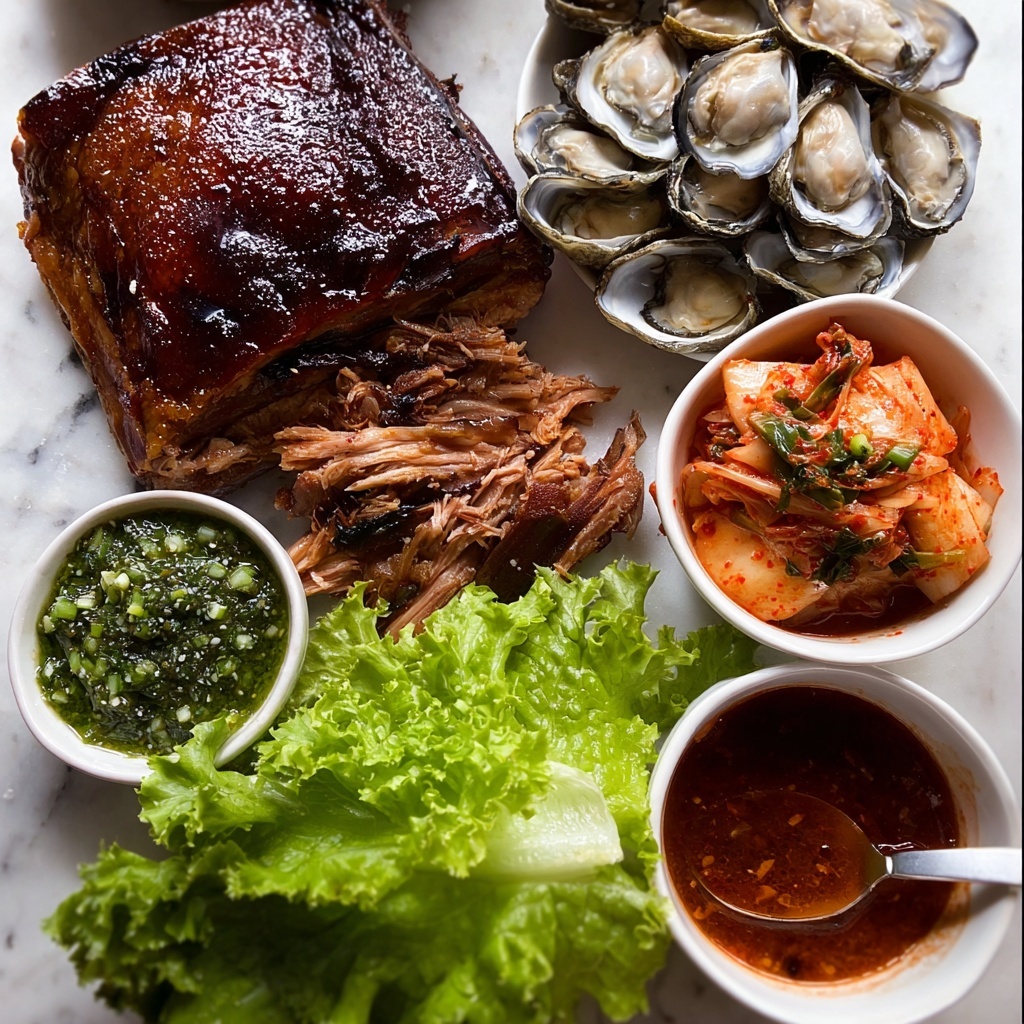
Finish your bossam with fresh garnishes like thinly sliced scallions or even raw oysters if you want to treat your guests. The oysters add a briny brightness that contrasts beautifully with the rich pork. Sprinkle sesame seeds or a little extra gochujang on the side to amp up that Korean flare.
Side Dishes
This dish shines when paired with classic Korean staples. Kimchi’s spicy, fermented crunch is the perfect foil for the mellow pork, and steamed white rice absorbs the luscious juices and sauces. You might also serve pickled radish or a simple cucumber salad to add cooling crispness to each mouthful.
Creative Ways to Present
Traditionally, bossam is served wrapped in fresh butter lettuce leaves, making each bite a personalized package of pork, sauce, and garnishes. You can also serve the pork sliced on a platter with bowls of ssamjang sauce and sides for diners to build their own wraps—this interactive serving style always makes for a fun, communal meal experience.
Make Ahead and Storage
Storing Leftovers
Once cooled, store any leftover bossam in an airtight container in the refrigerator for up to four days. Its flavors tend to deepen after resting, which means leftovers can be even tastier the next day.
Freezing
If you want to keep your bossam for longer, divide it into portions and freeze in sealed containers or vacuum bags. Properly frozen, it will retain great flavor and texture for up to three months, making it a convenient make-ahead meal option.
Reheating
When it’s time to enjoy the leftovers, gently reheat the bossam in a low-temperature oven or covered pan with a splash of water to keep the pork moist. Avoid microwaving on high to prevent drying out the succulent meat.
FAQs
What cut of pork is best for this recipe?
Pork butt or shoulder, bone-in and skinless, is ideal because its fat marbling and texture make it perfect for slow cooking until tender and juicy.
Can I use table salt instead of kosher salt?
It’s best to avoid table salt as kosher salt has larger crystals and provides more even seasoning without overpowering the dish.
Is it necessary to use both ssamjang and gochujang?
Yes, using both adds depth to the sauce. Ssamjang offers a savory earthiness, while gochujang provides spicy, slightly sweet complexity.
Can I make this recipe in a slow cooker?
Absolutely! A slow cooker is perfect for Momofuku Bossam because it gently breaks down tough fibers, resulting in tender, flavorful pork over several hours.
What should I serve with Momofuku Bossam?
Traditional sides like kimchi, steamed white rice, and fresh bib lettuce leaves complement the pork beautifully and balance the richness with freshness and acidity.
Final Thoughts
I cannot recommend enough giving the Momofuku Bossam (Korean Slow Cooked Pork Shoulder Roast) Recipe a try. From the first bite, its tender pork and vibrant Korean flavors will have you hooked, inviting you back to create this warm, satisfying, and truly remarkable dish again and again.
Print
Momofuku Bossam (Korean Slow Cooked Pork Shoulder Roast) Recipe
- Prep Time: 10 minutes
- Cook Time: 5 hours (300 minutes)
- Total Time: 5 hours 10 minutes
- Yield: 10 servings (10-12 people)
- Category: Main Course
- Method: Slow Cooking
- Cuisine: Korean
Description
Momofuku Bossam is a Korean-style slow-cooked pork shoulder roast known for its tender, flavorful meat infused with a sweet and savory marinade. This dish is traditionally served with fresh butter or bibb lettuce leaves, kimchi, steamed white rice, and optional fresh oysters, creating a satisfying and authentic Korean feast perfect for sharing.
Ingredients
Pork and Marinade
- 3.5–4 kg (7–8 lb) pork butt/shoulder, bone-in & skinless
- 1/2 cup (110g) white sugar
- 1/2 cup (115g) kosher or cooking salt (NOT table salt)
- 1 tbsp kosher or cooking salt (NOT table salt)
- 7 tbsp brown sugar (light or normal, not dark)
- 2.5 cups scallions, thinly sliced (both green and white parts, ~5–6 stems)
- 1/2 cup fresh ginger, peeled and finely grated
- 1/3 cup canola oil
- 1.5 tsp light soy sauce (or all-purpose soy sauce, not dark soy sauce)
- 1 tsp sherry vinegar
- 1/2 tsp kosher or cooking salt, to taste
Ssamjang Sauce
- 2 tbsp ssamjang
- 1 tbsp gochujang
- 5 tsp sherry vinegar
- 2 tbsp canola oil
- 1 tbsp water
- 1 tsp white sugar
Accompaniments
- 4 – 5 heads butter/bib lettuce (40 – 50+ leaves)
- 3 cups cooked white rice
- 500g (1 lb) kimchi
- 12+ oysters, raw, in shell (optional)
Instructions
- Prepare the pork: Begin by rinsing the pork butt and patting it dry thoroughly. Prepare the curing mixture by combining white sugar, kosher salt, and brown sugar. Rub this mixture all over the pork to season it evenly. This step helps to tenderize the meat and infuse it with sweetness and saltiness necessary for the final flavor.
- Cook the pork slowly: Place the pork in a large pot or slow cooker. Add scallions, grated ginger, canola oil, light soy sauce, sherry vinegar, and additional kosher salt. Cover and cook on low heat or in a slow cooker for approximately 5 hours (300 minutes), until the pork is incredibly tender and easily pulls apart with a fork. The slow cooking method is essential for breaking down the connective tissues and rendering the meat juicy and soft.
- Prepare the ssamjang sauce: While the pork is cooking, mix together the ssamjang, gochujang, sherry vinegar, canola oil, water, and white sugar in a small bowl. Adjust seasoning to your preference. This sauce provides a spicy, earthy, and slightly tangy accompaniment that balances the richness of the pork.
- Assemble and serve: Once the pork is cooked, slice or shred it into bite-sized pieces. Serve hot with butter/bib lettuce leaves for wrapping, alongside the ssamjang sauce, kimchi, steamed white rice, and optional fresh oysters for an authentic Korean bossam experience. To eat, spoon pork and a bit of sauce onto a lettuce leaf, add kimchi and an oyster if desired, wrap it up, and enjoy.
Notes
- Note 1: Use bone-in and skinless pork shoulder for the best balance of flavor and tender meat.
- Note 2: Use kosher or cooking salt, not table salt, as it dissolves better and helps cure the meat properly.
- Note 3: Fresh ginger should be peeled and finely grated to maximize flavor extraction.
- Note 4: Canola oil is preferred for its neutral flavor and high smoke point.
- Note 5: Light soy sauce is used for a mild umami without overpowering saltiness.
- Note 6: Sherry vinegar adds a delicate acidity that brightens the dish.
- Note 8: Ssamjang and gochujang are traditional Korean chili pastes essential for authentic flavor.
- Note 9: Butter or bibb lettuce leaves serve as the perfect wrapping vessel for the pork and sides.
- Note 10: Oysters are optional but add a fresh briny contrast when added to the wraps.