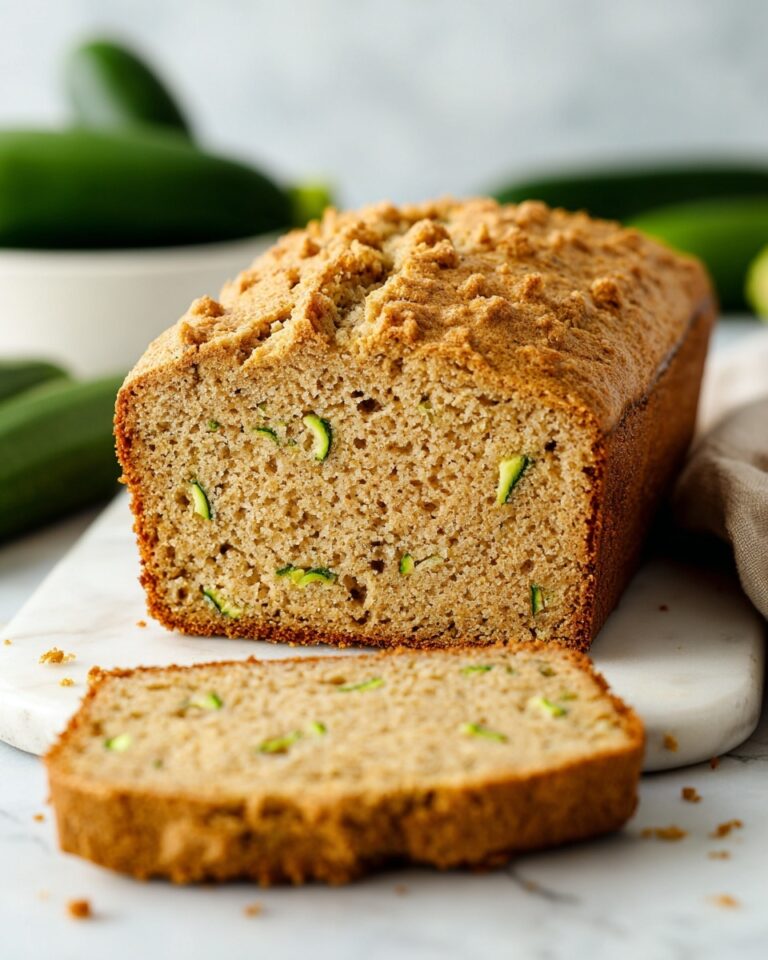
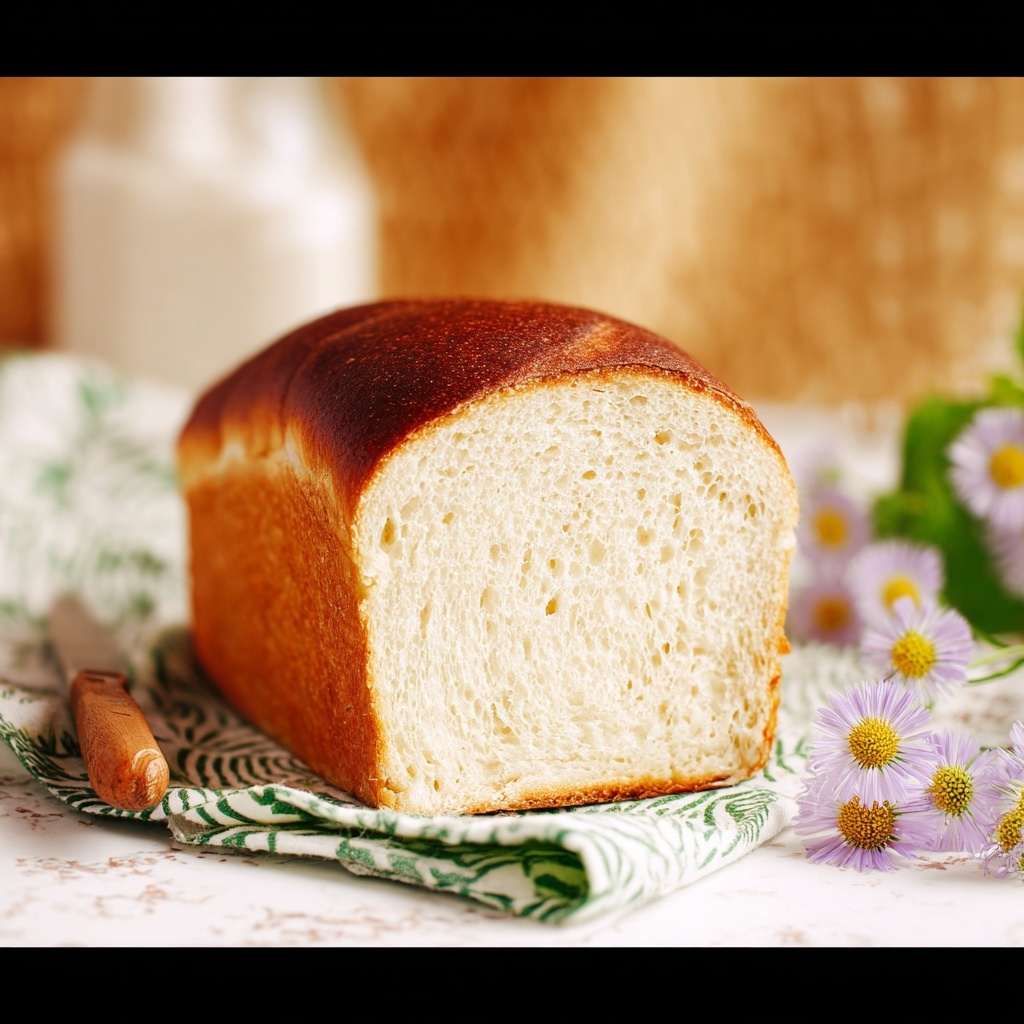
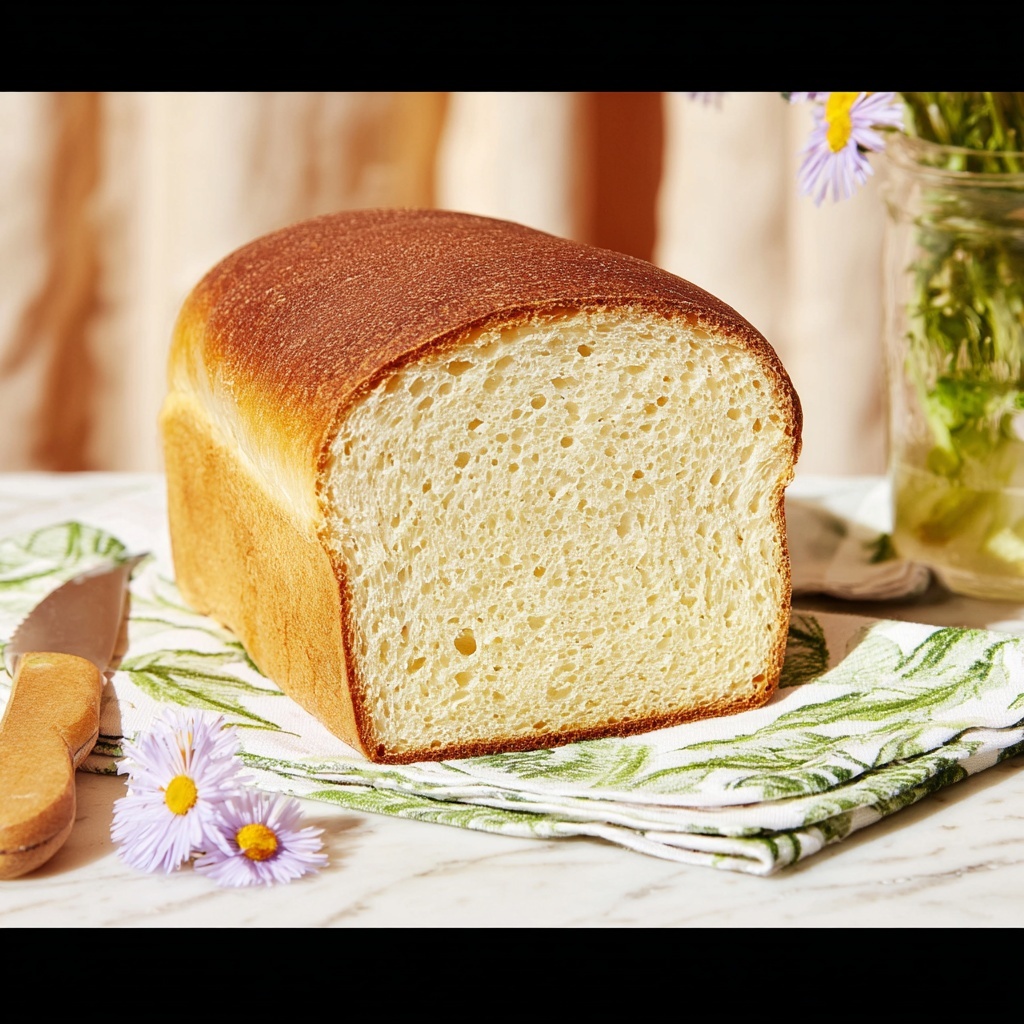
There is something incredibly satisfying about baking your own bread, and this Homemade White Bread Recipe is no exception. It yields two soft, pillowy loaves with a golden, slightly crisp crust and a tender crumb that practically melts in your mouth. Whether you’re a novice baker or someone who just loves the comforting smell of fresh-baked bread wafting through the kitchen, this recipe will quickly become a cherished favorite. Every bite tells a story of warmth, tradition, and the joy of homemade goodness.
Ingredients You’ll Need
The beauty of this Homemade White Bread Recipe lies in its simplicity. Each ingredient plays a crucial role, working together to create that perfect balance of flavor, texture, and aroma you crave in a classic loaf.
- Warm water: Activates the yeast and helps create a tender dough.
- Granulated sugar: Feeds the yeast and adds a subtle sweetness to the bread.
- Active dry yeast: The magic behind the bread’s rise and fluffy texture.
- Canola oil: Keeps the bread moist and contributes to a soft crumb.
- Salt: Balances flavor and controls yeast activity for a perfect rise.
- Bread flour: Provides the structure and chewiness essential for white bread.
- Egg and water mixture: Brushed on top to give the crust a shiny, golden finish.
How to Make Homemade White Bread Recipe
Step 1: Activate and Mix
Start by dissolving your yeast and a pinch of sugar in warm water. This warm environment encourages the yeast to wake up and bubble, which is a sure sign it’s ready to get working. While waiting, whisk together the remaining sugar, salt, and some of the flour. Once your yeast mixture is frothy, stir in the canola oil, then combine this with your dry ingredients to make a smooth batter-like dough. Gradually add more flour until the dough starts to thicken but still feels soft to the touch.
Step 2: Knead to Perfection
Transfer the dough onto a floured surface and knead for about 8 to 10 minutes until it becomes smooth and elastic. Kneading develops the gluten, the network of proteins that give the bread its structure and chewy texture. Once done, pop the dough into a greased bowl, turning it once to coat the surface lightly, cover it, and let it rise in a cozy spot until it doubles in size. This first rise is crucial for flavor and texture development.
Step 3: Shape and Second Rise
After the dough has risen, punch it down gently to release the trapped air and transfer it back onto your floured surface. Divide the dough evenly and shape each portion into a loaf form. Place the shaped dough in greased loaf pans and cover them again to allow for the second rise until they double in volume. This step ensures your loaves are light and airy, ready to bake into perfection. Don’t forget to brush the tops with the egg wash for that irresistible golden crust.
Step 4: Bake to Golden Perfection
Pop your pans into a preheated oven at 375 degrees Fahrenheit and bake until the crust turns a beautiful golden brown. Baking time is about 30 minutes, but keep an eye on the loaves to avoid over-baking. Once done, let your bread cool on a wire rack to set the crumb—this makes slicing easier and keeps the texture just right.
How to Serve Homemade White Bread Recipe
Garnishes
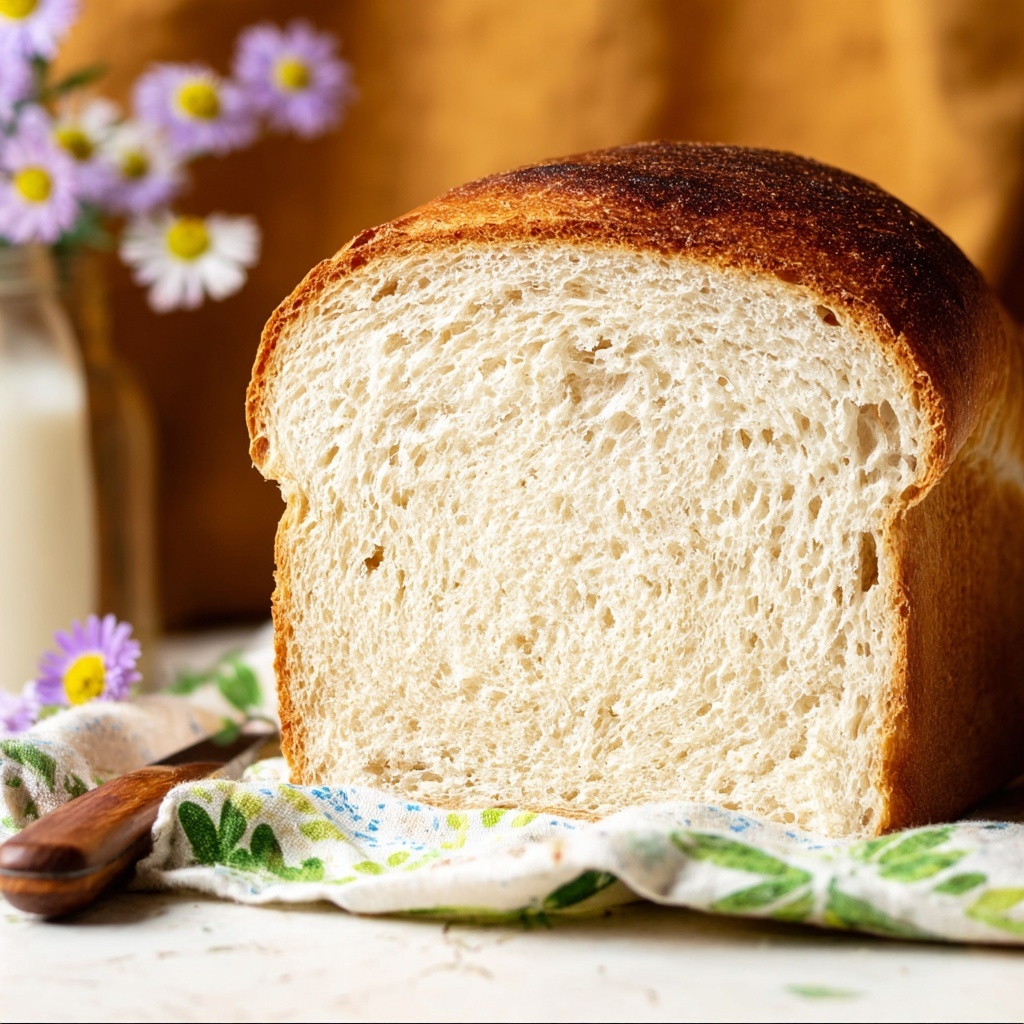
While the bread shines on its own, adding a little butter, a sprinkle of sea salt, or a smear of homemade jam can elevate this classic loaf to a delightful treat. Consider topping with freshly chopped herbs like rosemary or thyme for an herbal twist that makes your slice stand out even more.
Side Dishes
This bread pairs beautifully with a variety of dishes. Whether you’re dipping it into a rich tomato soup, serving alongside a hearty stew, or using it to soak up a luscious pasta sauce, these soft, fresh loaves make every meal feel homey and complete.
Creative Ways to Present
Feeling adventurous? Slice the bread thick and grill it for mouthwatering toast with avocado and a poached egg. Or turn it into mini sandwiches for a party platter. The possibilities with this Homemade White Bread Recipe are endless, and each presentation brings its own comfort and charm.
Make Ahead and Storage
Storing Leftovers
If you find yourself with extra bread (which is highly possible with this recipe), store it in an airtight container or ziplock bag at room temperature. It will stay fresh for about 3 to 4 days, perfect for sandwiches or toast.
Freezing
You can freeze your homemade loaves to keep them fresh longer. Wrap each loaf tightly in plastic wrap and then foil, or place slices between parchment paper in a freezer bag. Freeze for up to three months without losing flavor or texture.
Reheating
To bring back that just-baked warmth, reheat slices in a toaster or warm the whole loaf in the oven wrapped in foil. This simple step revives the crust’s crispness and soft crumb, making your Homemade White Bread Recipe taste freshly baked all over again.
FAQs
Can I use all-purpose flour instead of bread flour?
Absolutely, you can substitute all-purpose flour, but keep in mind the texture will be slightly less chewy since bread flour has higher protein content which helps gluten development and structure.
Why did my bread not rise properly?
Rising issues often come from using water that is too hot or cold, or expired yeast. Make sure your water is warm but not boiling, and your yeast is fresh and active.
Can I add ingredients like herbs or cheese to this recipe?
Yes! Adding herbs, cheese, or even garlic can enhance the flavor. Just fold them into the dough during the kneading stage for a delicious twist on the classic.
How do I get a soft crust instead of a crusty one?
Brushing the loaf with butter right after baking and storing it in a plastic bag instead of open air will help keep the crust soft.
Is it necessary to brush the bread with egg wash?
While not mandatory, the egg wash creates a gorgeous golden color and shiny finish, which is a lovely finishing touch that elevates the loaf’s appearance.
Final Thoughts
There is nothing quite like the experience of pulling a warm loaf of this Homemade White Bread Recipe out of the oven. It is an absolute game-changer whether you’re looking to upgrade your sandwich game, impress guests, or simply enjoy the comfort of homemade baking. Trust me, once you try this recipe, your kitchen will never be the same again.
Print
Homemade White Bread Recipe
- Prep Time: 20 minutes
- Cook Time: 30 minutes
- Total Time: 2 hours 50 minutes
- Yield: 2 loaves (16 slices each)
- Category: Bread
- Method: Baking
- Cuisine: American
Description
This classic homemade white bread recipe yields two soft and fluffy loaves with a golden crust. Made with simple pantry staples and using traditional kneading and rising techniques, it’s perfect for sandwiches, toast, or enjoying fresh with butter. The recipe walks you through yeast activation, dough preparation, proofing, shaping, and baking steps to achieve bakery-quality bread at home.
Ingredients
Yeast Mixture
- 2 1/4 cups warm water
- 1/2 teaspoon granulated sugar
- 1 1/4 ounce package active dry yeast
Dough
- 3 tablespoons granulated sugar
- 1 tablespoon salt
- 2 tablespoons canola oil
- 6 1/4 to 6 3/4 cups bread flour
Topping
- 1 egg, whisked with 1 tablespoon water (for brushing)
Instructions
- Activate Yeast: In a large bowl, dissolve the active dry yeast and 1/2 teaspoon of sugar in 2 1/4 cups of warm water. Let it sit until bubbles form on the surface, indicating the yeast is active and bubbly.
- Mix Dough Ingredients: Whisk together the remaining 3 tablespoons sugar, salt, and 3 cups of bread flour in a separate large bowl. Stir the canola oil into the yeast mixture, then pour the yeast mixture into the flour mixture. Beat everything together until smooth. Gradually stir in the remaining flour, half a cup at a time, until a soft dough forms.
- Knead Dough: Turn the dough onto a floured surface and knead it for 8 to 10 minutes until it becomes smooth and elastic. This develops the gluten structure necessary for a good bread crumb.
- First Rise: Place the kneaded dough in a greased bowl, turning it once so the top is greased. Cover the bowl and let the dough rise in a warm place until it doubles in size, which takes about 1 1/2 to 2 hours.
- Shape and Second Rise: Punch down the risen dough to release air. Turn it onto a lightly floured surface and divide it in half. Shape each half into a loaf and place them in two greased 9×5-inch loaf pans. Cover and let rise again until doubled, about 1 to 1 1/2 hours.
- Prepare for Baking: Whisk together the egg and water, then brush this egg wash thoroughly over the tops of the loaves to give them a glossy, golden crust when baked.
- Bake: Preheat the oven to 375°F (190°C). Bake the loaves in the oven until they are golden brown and cooked through, approximately 30 minutes. Once baked, remove the loaves from the pans and transfer them to wire racks to cool completely.
Notes
- Make sure the water is warm but not hot to avoid killing the yeast (around 105-115°F or 40-46°C).
- Kneading can also be done with a stand mixer fitted with a dough hook if preferred.
- The rising times can vary depending on the temperature and humidity of your kitchen.
- Let the bread cool completely to prevent a gummy texture inside when slicing.
- Egg wash gives the bread a shiny crust; omit for a matte finish.