Description
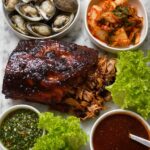
Momofuku Bossam is a Korean-style slow-cooked pork shoulder roast known for its tender, flavorful meat infused with a sweet and savory marinade. This dish is traditionally served with fresh butter or bibb lettuce leaves, kimchi, steamed white rice, and optional fresh oysters, creating a satisfying and authentic Korean feast perfect for sharing.
Ingredients
Scale
Pork and Marinade
- 3.5-4 kg (7-8 lb) pork butt/shoulder, bone-in & skinless
- 1/2 cup (110g) white sugar
- 1/2 cup (115g) kosher or cooking salt (NOT table salt)
- 1 tbsp kosher or cooking salt (NOT table salt)
- 7 tbsp brown sugar (light or normal, not dark)
- 2.5 cups scallions, thinly sliced (both green and white parts, ~5-6 stems)
- 1/2 cup fresh ginger, peeled and finely grated
- 1/3 cup canola oil
- 1.5 tsp light soy sauce (or all-purpose soy sauce, not dark soy sauce)
- 1 tsp sherry vinegar
- 1/2 tsp kosher or cooking salt, to taste
Ssamjang Sauce
- 2 tbsp ssamjang
- 1 tbsp gochujang
- 5 tsp sherry vinegar
- 2 tbsp canola oil
- 1 tbsp water
- 1 tsp white sugar
Accompaniments
- 4 – 5 heads butter/bib lettuce (40 – 50+ leaves)
- 3 cups cooked white rice
- 500g (1 lb) kimchi
- 12+ oysters, raw, in shell (optional)
Instructions
- Prepare the pork: Begin by rinsing the pork butt and patting it dry thoroughly. Prepare the curing mixture by combining white sugar, kosher salt, and brown sugar. Rub this mixture all over the pork to season it evenly. This step helps to tenderize the meat and infuse it with sweetness and saltiness necessary for the final flavor.
- Cook the pork slowly: Place the pork in a large pot or slow cooker. Add scallions, grated ginger, canola oil, light soy sauce, sherry vinegar, and additional kosher salt. Cover and cook on low heat or in a slow cooker for approximately 5 hours (300 minutes), until the pork is incredibly tender and easily pulls apart with a fork. The slow cooking method is essential for breaking down the connective tissues and rendering the meat juicy and soft.
- Prepare the ssamjang sauce: While the pork is cooking, mix together the ssamjang, gochujang, sherry vinegar, canola oil, water, and white sugar in a small bowl. Adjust seasoning to your preference. This sauce provides a spicy, earthy, and slightly tangy accompaniment that balances the richness of the pork.
- Assemble and serve: Once the pork is cooked, slice or shred it into bite-sized pieces. Serve hot with butter/bib lettuce leaves for wrapping, alongside the ssamjang sauce, kimchi, steamed white rice, and optional fresh oysters for an authentic Korean bossam experience. To eat, spoon pork and a bit of sauce onto a lettuce leaf, add kimchi and an oyster if desired, wrap it up, and enjoy.
Notes
- Note 1: Use bone-in and skinless pork shoulder for the best balance of flavor and tender meat.
- Note 2: Use kosher or cooking salt, not table salt, as it dissolves better and helps cure the meat properly.
- Note 3: Fresh ginger should be peeled and finely grated to maximize flavor extraction.
- Note 4: Canola oil is preferred for its neutral flavor and high smoke point.
- Note 5: Light soy sauce is used for a mild umami without overpowering saltiness.
- Note 6: Sherry vinegar adds a delicate acidity that brightens the dish.
- Note 8: Ssamjang and gochujang are traditional Korean chili pastes essential for authentic flavor.
- Note 9: Butter or bibb lettuce leaves serve as the perfect wrapping vessel for the pork and sides.
- Note 10: Oysters are optional but add a fresh briny contrast when added to the wraps.