Description
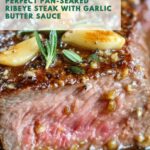
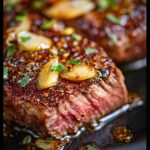
This recipe guides you through making a perfectly seared ribeye steak with a flavorful garlic herb butter sauce. Using a high-quality marbled ribeye, salted in advance for enhanced tenderness and flavor, the steak is pan-seared to juicy perfection and served drizzled with a rich and aromatic butter sauce infused with garlic, thyme, and rosemary. Ideal for a special dinner, this recipe ensures a tender, juicy steak full of robust, savory notes.
Ingredients
Scale
Steak and Seasoning
- 1 pound ribeye steak (well marbled)
- 2 teaspoons kosher salt (or 1¼ teaspoons table salt if kosher is not available)
- 1-2 teaspoons vegetable or canola oil
- Additional salt (to taste)
Garlic Herb Butter Sauce
- 3-4 tablespoons salted butter (melted)
- ½ teaspoon garlic powder
- ½ teaspoon black pepper
- 1 teaspoon fresh thyme leaves (or ½ teaspoon dried thyme)
- 1 teaspoon fresh rosemary, chopped (or ½ teaspoon dried rosemary)
- 2 cloves garlic (smashed, peeled, and sliced into strips)
- 2-3 sprigs fresh thyme for basting
- 2-3 sprigs fresh rosemary for basting
Instructions
- Choose Your Ribeye Steak: Select a high-quality steak that is well marbled, ideally USDA Prime or Choice. The quality and marbling are crucial for flavor and tenderness. Bone-in or boneless steaks both work well for this recipe.
- Salt the Steak in Advance: At least 4 hours and up to 48 hours before cooking, generously rub the steak with kosher salt (about 2 teaspoons total for 1 pound). Make sure to cover both sides and the edges. Place the salted steak uncovered on a plate in the fridge to dry out. This long salting process tenderizes and flavors the meat deeply.
- Bring Steak to Room Temperature: About 30 minutes before cooking, remove the steak from the fridge and let it sit at room temperature. This ensures even cooking and prevents the edges from overcooking while the center remains underdone.
- Prepare the Garlic Herb Butter Sauce: Melt 3-4 tablespoons of salted butter in a microwave-safe bowl. Stir in garlic powder, black pepper, fresh thyme leaves, chopped rosemary, and add the smashed and sliced garlic cloves. Set aside. Have the fresh thyme and rosemary sprigs ready for basting during cooking.
- Oil and Preheat the Pan: Just before cooking, drizzle 1-2 teaspoons of vegetable or canola oil over the steak and rub it in thoroughly. Heat a heavy-bottomed skillet or cast iron pan over medium-high heat until it is very hot but not smoking.
- Sear the Steak: Place the steak in the hot pan and let it sear without moving for about 3-4 minutes until a deep golden crust forms. Flip the steak and sear the other side for another 3-4 minutes.
- Baste with Garlic Herb Butter: Lower heat to medium. Add the melted garlic herb butter to the pan along with the fresh thyme and rosemary sprigs. Tilt the pan slightly and use a spoon to continuously baste the steak with the flavored butter for about 2-3 minutes, turning once if needed, until the steak reaches desired doneness (125°F for medium-rare). Remove the steak from the pan and let it rest for about 5-10 minutes before slicing and serving.
Notes
- Use kosher salt for dry brining the steak; if only table salt is available, reduce the amount as table salt is denser.
- Dry brining the steak uncovered in the fridge for several hours enhances the crust formation and flavor.
- Letting the steak come to room temperature before cooking ensures even doneness.
- Use a heavy skillet, ideally cast iron, for the best sear.
- Adjust cooking times based on steak thickness and preferred doneness.
- Resting the steak after cooking is important to redistribute juices and maintain juiciness.